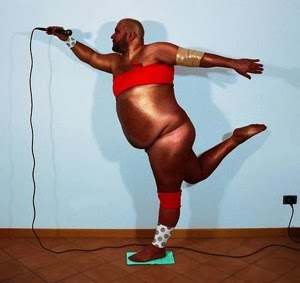
Hyperreality is used in semiotics and postmodern philosophy to describe a hypothetical inability of consciousness to distinguish reality from fantasy, especially in technologically advanced postmodern cultures. Hyperreality is a means to characterize the way consciousness defines what is actually "real" in a world where a multitude of media can radically shape and filter an original event or experience. Some famous theorists of hyperreality include Jean Baudrillard, Albert Borgmann, Daniel Boorstin, and Umberto Eco.
Most aspects of hyperreality can be thought of as "reality by proxy." Some examples are simpler: the McDonald's "M" arches create a world with the promise of endless amounts of identical food, when in "reality" the "M" represents nothing, and the food produced is neither identical nor infinite.
Baudrillard in particular suggests that the world we live in has been replaced by a copy world, where we seek simulated stimuli and nothing more. Baudrillard borrows, from Jorge Luis Borges (who already borrowed from Lewis Carroll), the example of a society whose cartographers create a map so detailed that it covers the very things it was designed to represent. When the empire declines, the map fades into the landscape and there is neither the representation nor the real remaining – just the hyperreal. Baudrillard's idea of hyperreality was heavily influenced by phenomenology, semiotics, and Marshall McLuhan.
Examples
1. A magazine photo of a model that has been touched up with a computer.
2. Films in which characters and settings are either digitally enhanced or created entirely from CGI (e.g.: 300, where the entire film was shot in front of a blue/green screen, with all settings super-imposed).
3. A well manicured garden (nature as hyperreal).
4. Any massively promoted versions of historical or present "facts" (e.g. "General Ignorance" from QI, where the questions have seemingly obvious answers, which are actually wrong).
5. Professional sports athletes as super, invincible versions of the human beings.
6. Many world cities and places which did not evolve as functional places with some basis in reality, as if they were creatio ex nihilo (literally 'creation out of nothing'): Disney World; Dubai; Celebration, Florida; and Las Vegas.
7. TV and film in general (especially "reality" TV), due to its creation of a world of fantasy and its dependence that the viewer will engage with these fantasy worlds. The current trend is to glamorize the mundane using histrionics.
8. A retail store that looks completely stocked and perfect due to facing, creating a world of endless identical products.
9. A life which cannot be (e.g. the perfect facsimile of a celebrity's invented persona).
10. A high end sex doll used as a simulacrum of a bodily or psychologically unattainable partner.
11. A newly made building or item designed to look old, or to recreate or reproduce an older artifact, by simulating the feel of age or aging.
12. Constructed languages (such as E-Prime) or "reconstructed" extinct dialects.
13. Weak virtual reality which is greater than any possible simulation of physical reality.